Final Project Proposal
24 Mar 2026
Aligning Objectives With Safety: SRCH Navigator Proposal
Modern computer science and engineering education continually changes and evolves, especially in areas such as socially responsible computing. However, while information on these topics continues to grow and develop, it is often fragmented, incomplete, or not clearly explained to the end user. Additionally, it becomes more and more difficult for instructors in this field to align their courses with these ever-changing subjects. This project proposes a system that bridges the gap between what instructors want students to learn and the content available to teach it.
The Problem
The Socially Responsible Computing Handbook (SRCH) is an evolving collection of content intended to support instructors. However, it is not designed as a traditional textbook for a single course. Instead, it is a resource where instructors are expected to select relevant material and apply it to their own courses, which proposes several challenges:
• Some content is too advanced or not aligned with a course’s learning objectives
• The SRCH is incomplete and continuously evolving
• There is no structured way to map course objectives to relevant material
• Instructors must manually curate content, leading to inconsistency and inefficiency
• There is no standardized workflow for sharing curated curriculum paths
Essentially, instructors are given a large resource, but without the tools to effectively organize and align it to their teaching goals.
The Solution
This project proposes a web application that allows instructors to:
• Define their own courses, categorized using Bloom’s Taxonomy
• Browse and search SRCH content
• Map course learning objectives to relevant SRCH material
• Contribute new material and share curated content with others
This system will serve as a tool to not only align curriculum with the SRCH subjects, but to allow instructors to help develop a platform that uses the SRCH as its basis. This application is designed specifically for instructors at the University of Hawai‘i at Mānoa, particularly those teaching ICS courses such as ICS 314, where integrating socially responsible computing topics into technical material is increasingly important.
Mockup Page Ideas
To support the development of the platform, the application will use several key pages:
Home Page
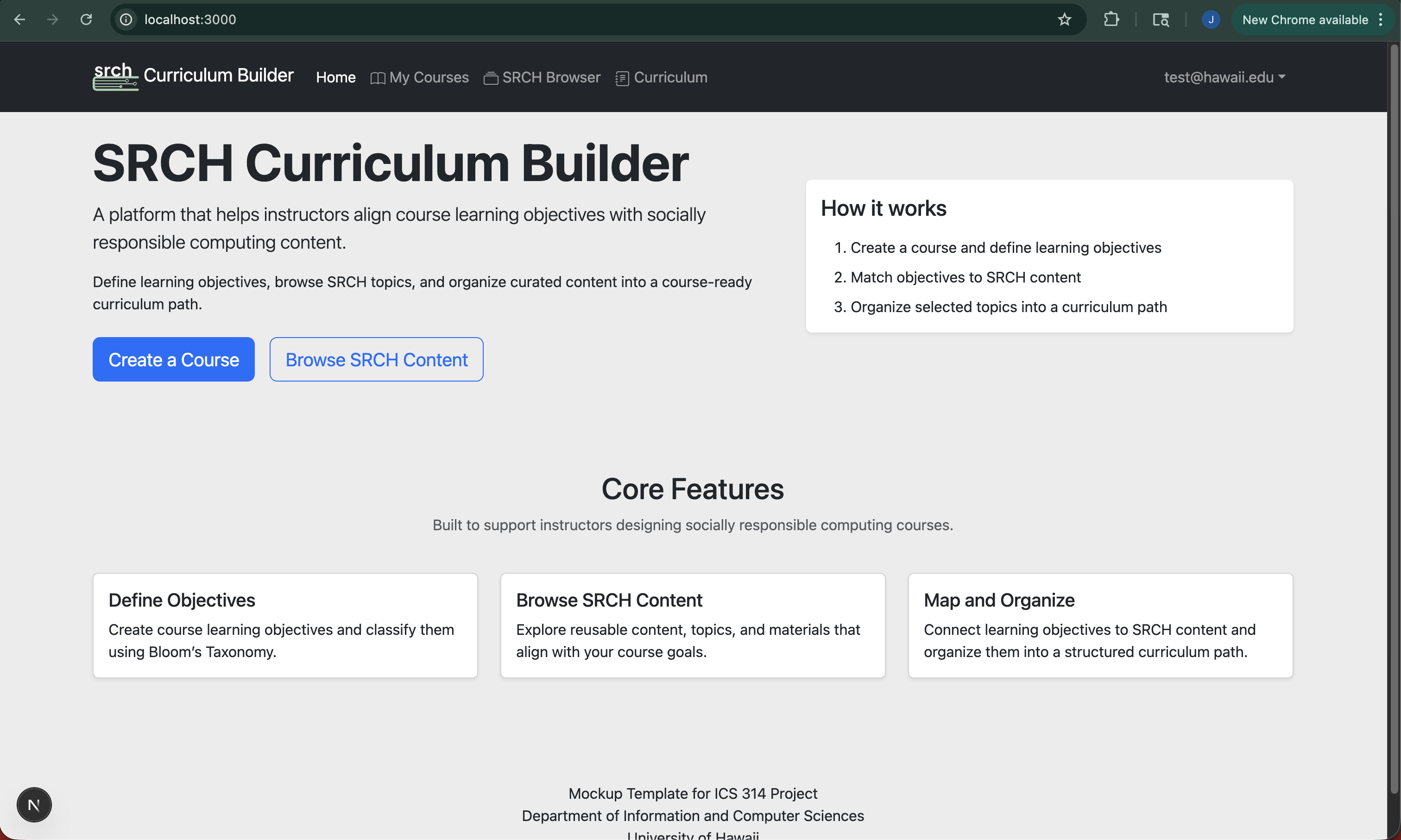
A landing page introducing the platform and its purpose, along with quick access to login or course dashboards.
Login / Register
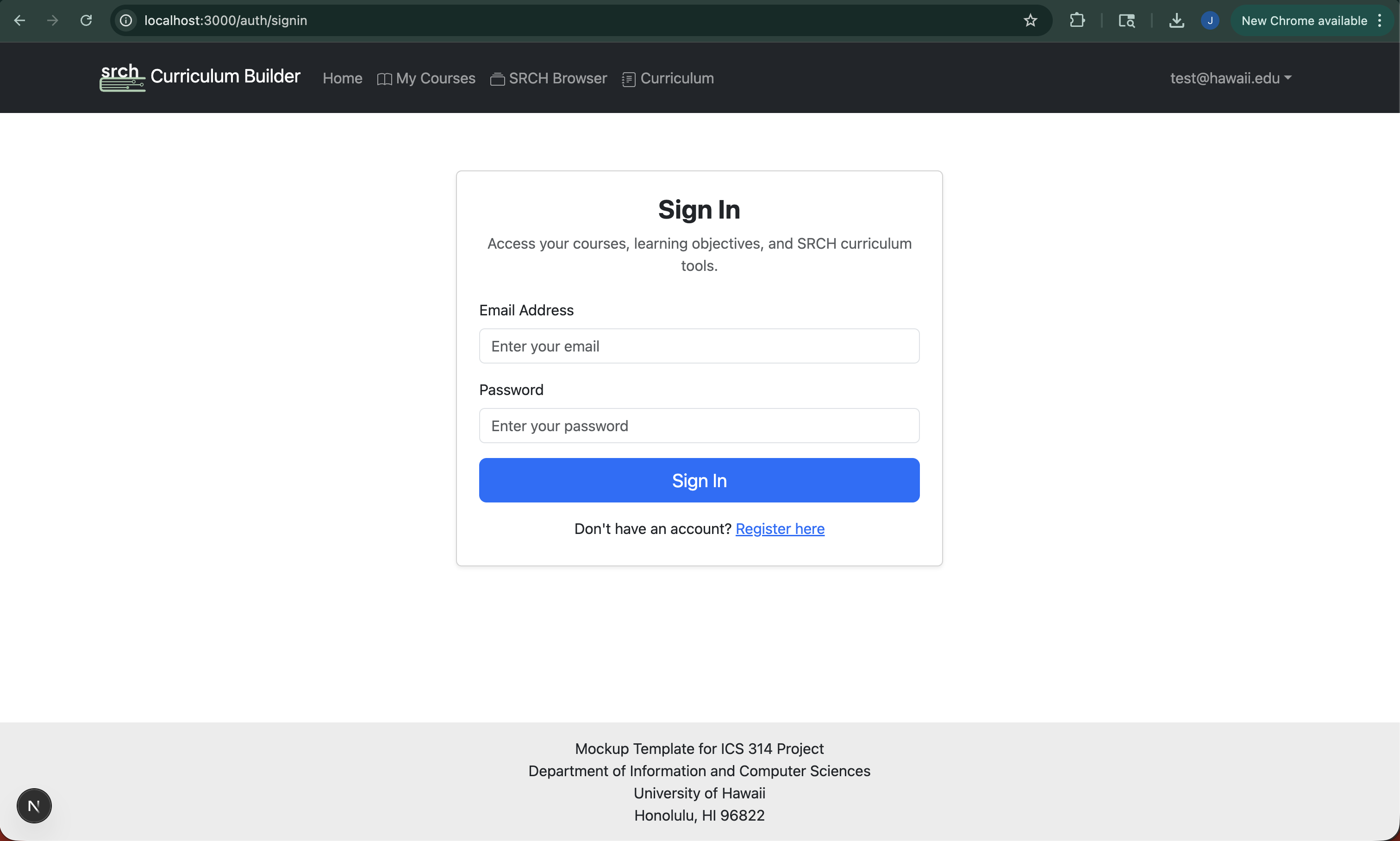
An authentication system allowing instructors and editors to access their data and contributions.
Profile Page
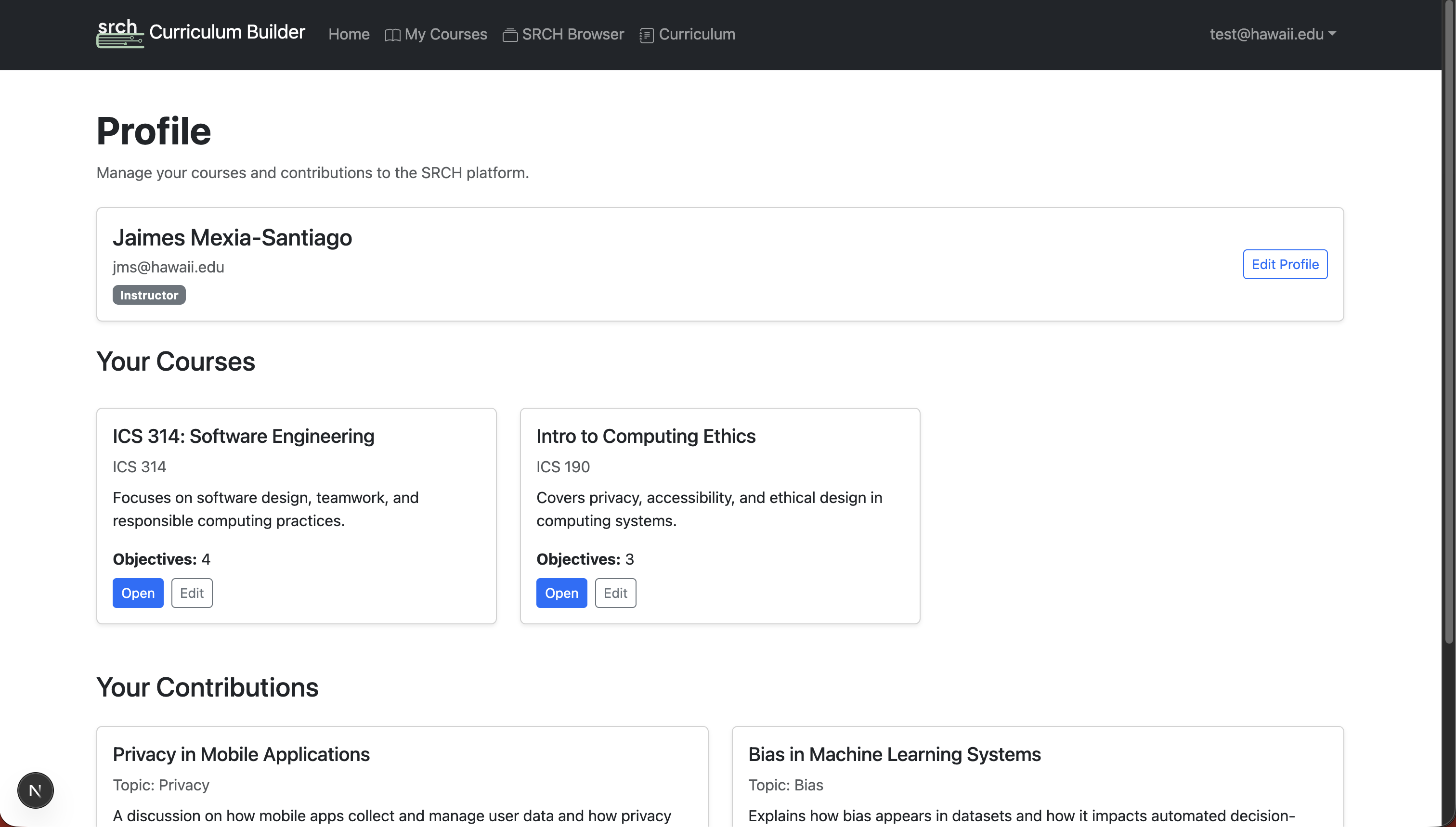
Displays user information, courses created and contributed content.
Course Management (CRUD)
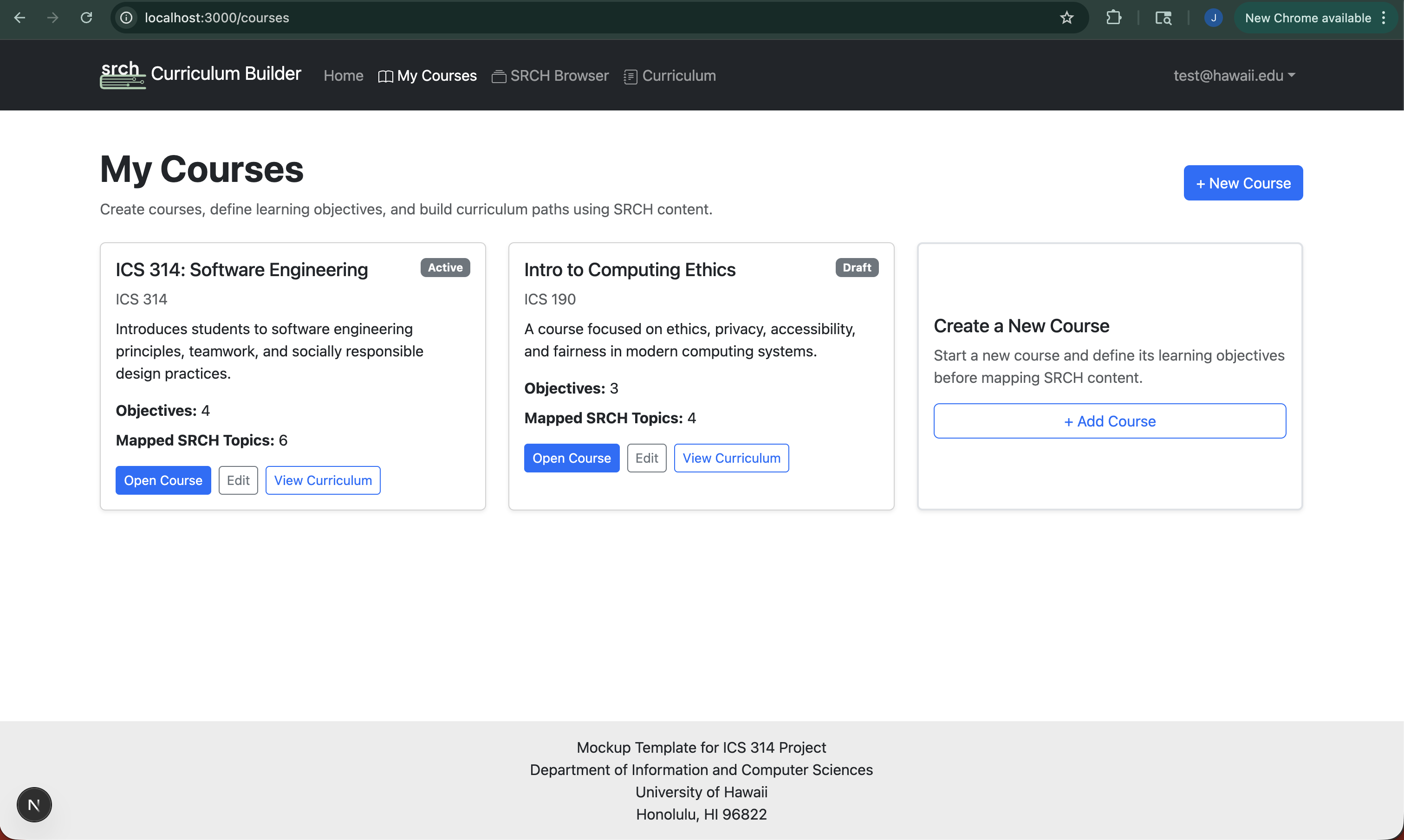
Allows instructors to:
• Create, edit, and delete courses • Provide descriptions and metadata • Manage course-specific learning objectives
SRCH Content Browser
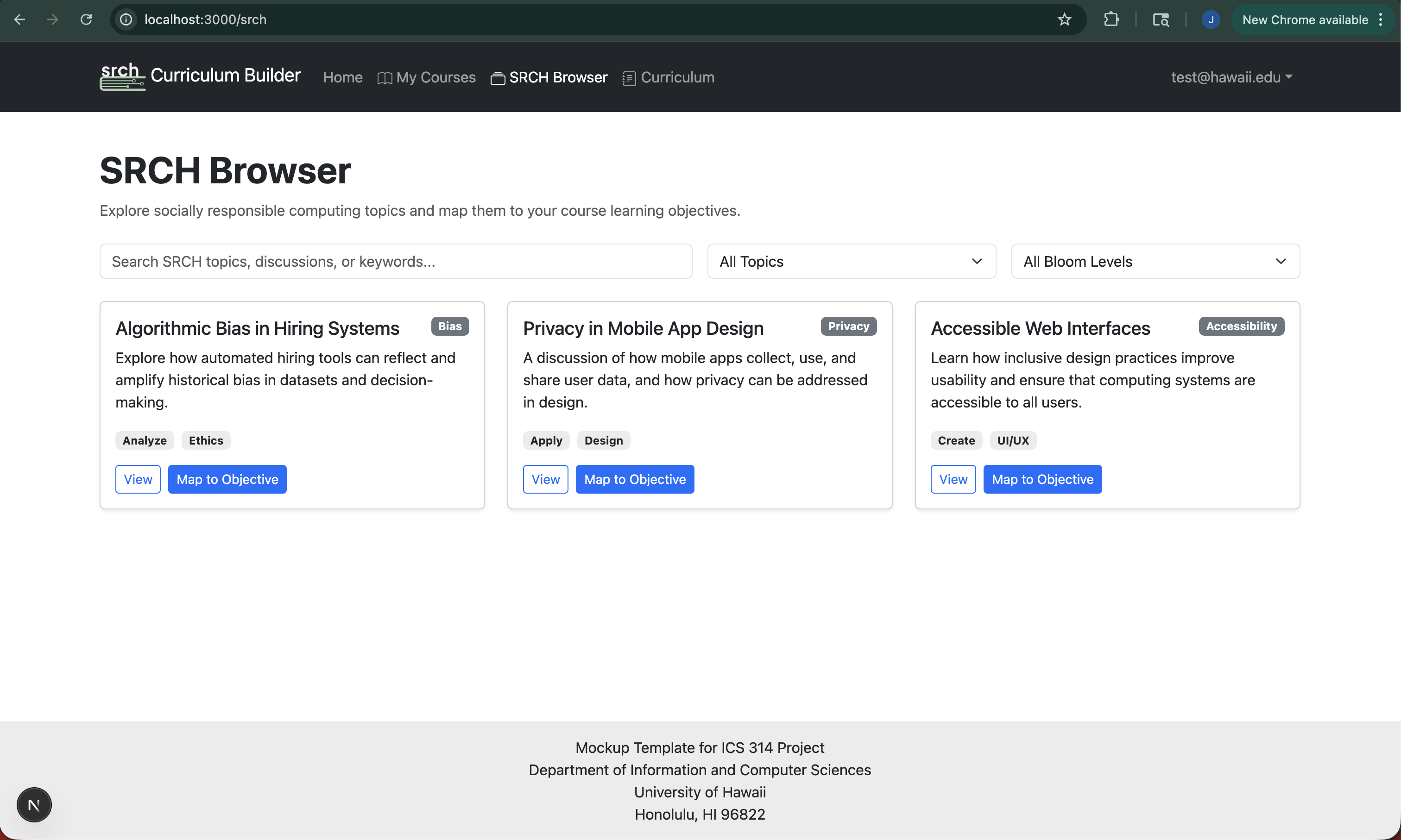
A search tool that allows for:
• Viewing SRCH topics
• Filtering by topic, difficulty, or relevance
• Selecting content for potential inclusion
Content Creation
Allows instructors to:
• Add new SRCH content
• Include discussions, examples, and explanations
• Attach bibliographic references
Use Case Ideas
As this system is designed to support realistic instructor workflows, the usual use cases include:
Course Creation and Alignment
An instructor creates a new course and defines several learning objectives, such as:
• “Understand ethical implications of AI systems”
• “Understanding design processes behind accessibility”
Each objective will be categorized using Bloom’s Taxonomy.
The instructor then browses the SRCH and identifies relevant topics. As they explore, they attach content to specific learning objectives, forming a structured mapping between goals and materials.
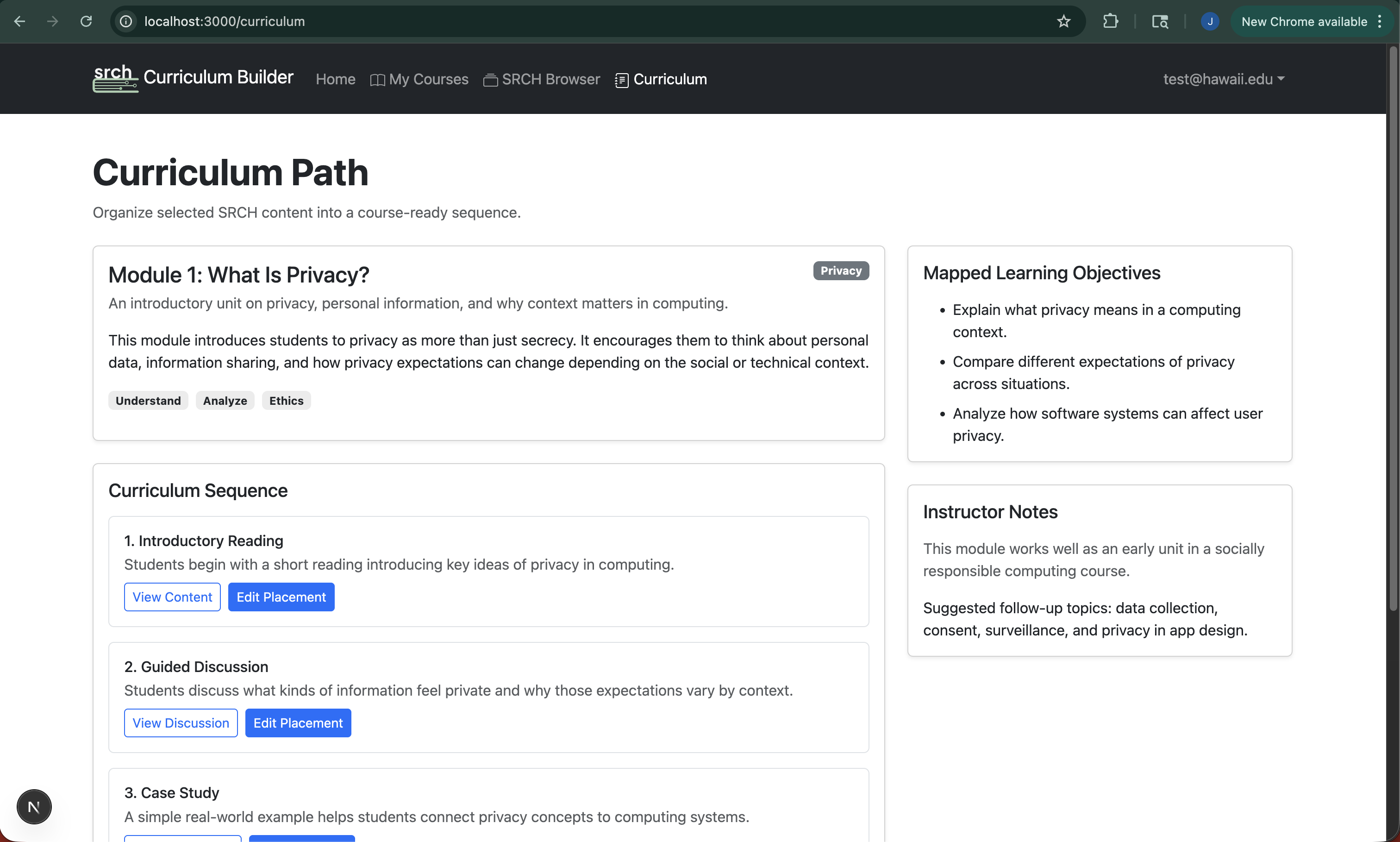
Curriculum Structuring
After selecting the relevant topics from the SRCH, the instructor is able to organize it and create a representation of how students will learn those topics from a given course material.
Content Contribution
Because the SRCH is actively being developed, there are many gaps in the information. An instructor would be able to identify this need and:
• Create new content
• Add explanations and case studies
• Include appropriate learning objectives and references used from their courses
Beyond the Basics
While the initial proposal focuses on core functionality, there are several ways the scope could be expanded:
Analytics Dashboard
Track how often content is used, which objectives are most common, and where gaps exist.
Integration with Learning Platforms
Since platforms like Lamaku already use Bloom’s Taxonomy, this system could integrate directly with assignment creation tools. Additionally, integration with Zotero or other like systems into the search functionality will assist with expanding the knowledge base and decreasing any gaps.
Future versions could include synchronization with an external SRCH database, allowing content to be updated dynamically while preserving instructor-specific mappings.
Collaborative Curriculum Design
Allow for the ability to share information between instructors, allowing for one to implement course alignments and mappings already integrated with the SRCH (acting like a similar functionality of sharing a repository structure in GitHub).
Conclusion
This project addresses a real challenge in modern computing education: aligning new content with structured learning goals. By combining the wider knowledge data pool with the tools proposed into a single platform, this system has the potential to significantly improve how instructors engage with educational resources. Rather than forcing instructors to adapt content found elsewhere into their courses, this tool helps them to shape content around their objectives.
Proposer
Jaimes Mexia-Santiago
Note on AI usage:
The artificial AI tools ChatGPT and Grammarly AI were used primarily to develop the structuring of this essay, to include checking to ensure requirements were met. However, all design direction and writiing reflect my own understanding and knowledge of what is possible within the software engineering topics discussed in class.